Semantic-Guided-Low-Light-Image-Enhancement
이것은 저희 논문 "Semantic-Guided Zero-Shot Learning for Low-Light Image/Video Enhancement"의 공식 Pytorch 구현입니다.Updates
- 2021.11.27: 모델 아키텍처 그림이 업로드되었습니다.
- 2021.11.10: 이 연구가 채택되어 WACV 2022에서 발표될 예정입니다.
- 2021.10.8: mPA 및 mIOU 점수를 계산하는 쉬운 방법이 이 저장소에 있습니다.
- 2021.10.6: GIF 형식의 향상된 저조도 비디오 샘플이 공개되었습니다.
- 2021.10.5: 저조도 비디오 샘플과 향상된 결과는 다음에서 확인할 수 있습니다: [Low-Light] [Enhanced]
- 2021.10.5: 저의 새로운 저장소에는 저조도 향상 방법 모음이 포함되어 있습니다. 도움이 되시길 바랍니다.
- 2021.10.4: arxiv 링크는 http://arxiv.org/abs/2110.00970 에서 확인할 수 있습니다.
Abstract
Low-light images challenge both human perceptions and computer vision algorithms. It is crucial to make algorithms robust to enlighten low-light images for computational photography and computer vision applications such as real-time detection and segmentation tasks. This paper proposes a semantic-guided zero-shot low-light enhancement network which is trained in the absence of paired images, unpaired datasets, and segmentation annotation. Firstly, we design an efficient enhancement factor extraction network using depthwise separable convolution. Secondly, we propose a recurrent image enhancement network for progressively enhancing the low-light image. Finally, we introduce an unsupervised semantic segmentation network for preserving the semantic information. Extensive experiments on various benchmark datasets and a low-light video demonstrate that our model outperforms the previous state-of-the-art qualitatively and quantitatively. We further discuss the benefits of the proposed method for low-light detection and segmentation.모델 아키텍처
아래 링크를 클릭하여 모델 아키텍처를 pdf 형식으로 확인하세요.샘플 결과
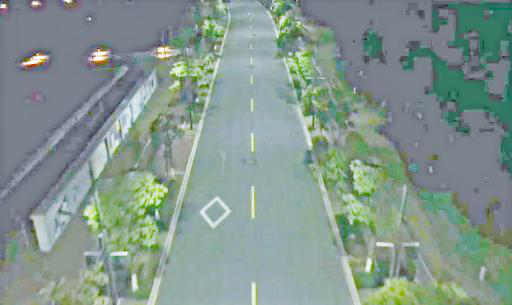
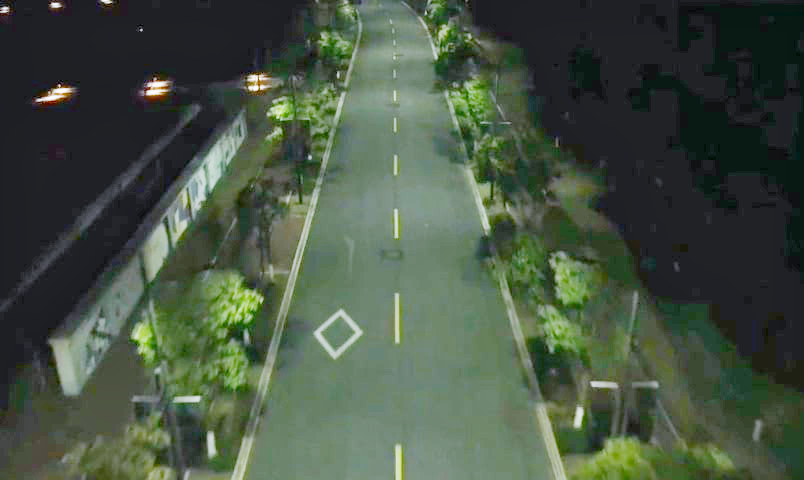
1. 저조도 비디오 프레임
왼쪽에서 오른쪽, 위에서 아래 순서대로: Dark, Retinex [1], KinD [2], EnlightenGAN [3], Zero-DCE [4], 당사 방법.
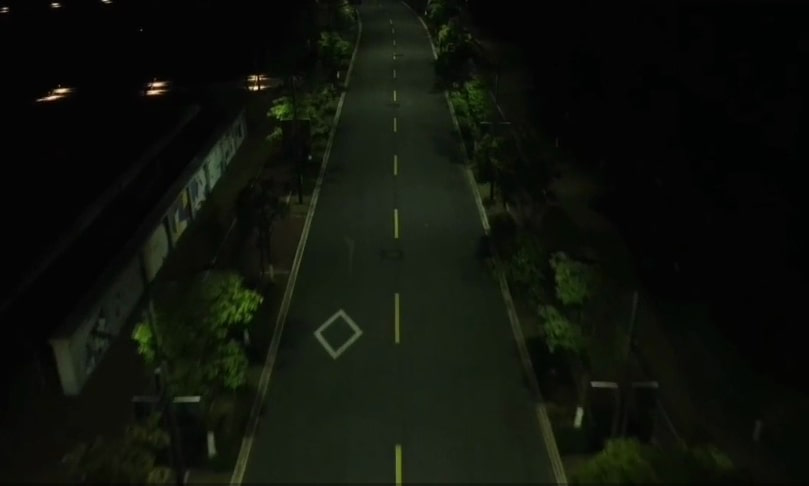
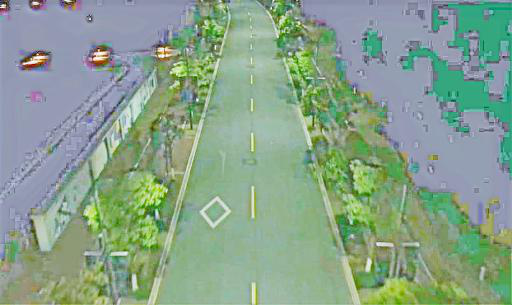
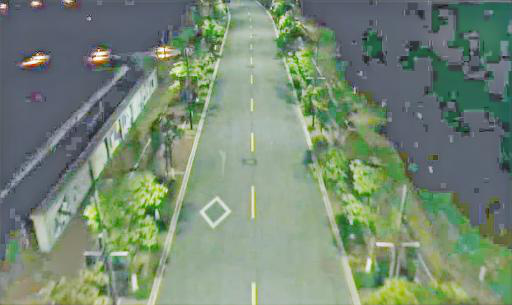
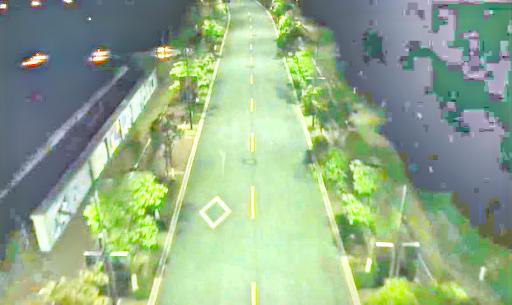
2. 저조도 이미지 (실제 환경)
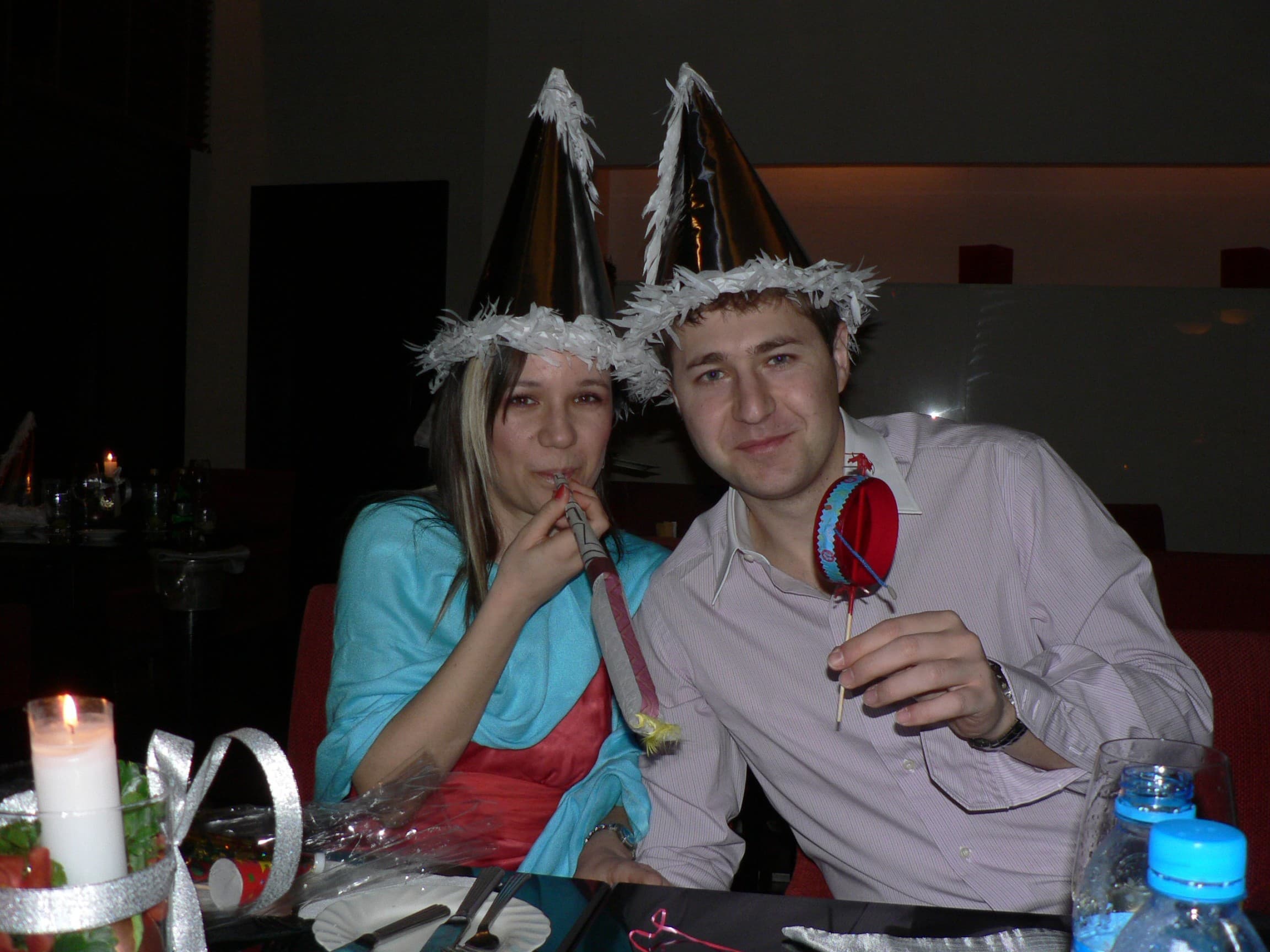
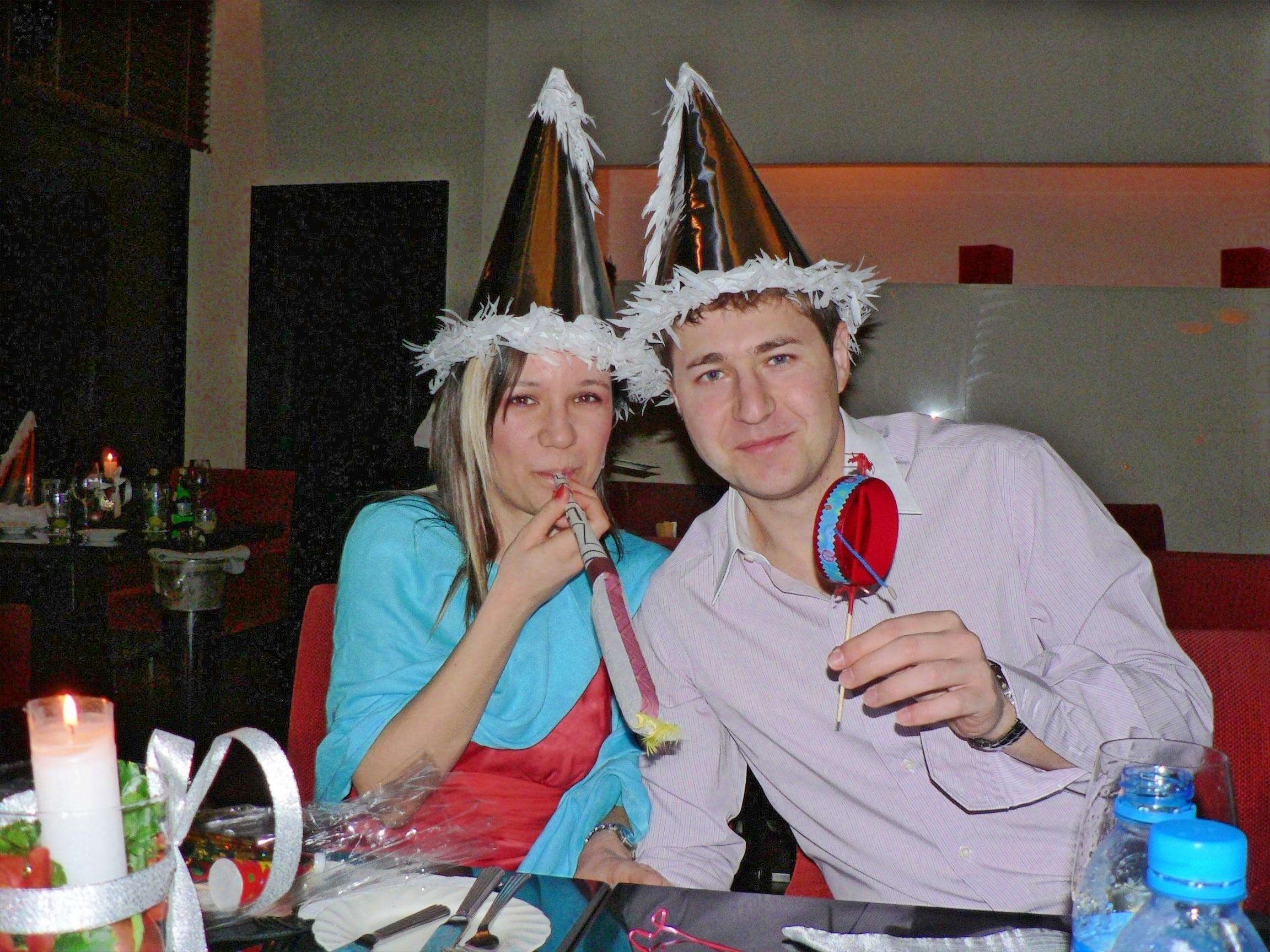
왼쪽에서 오른쪽, 위에서 아래 순서대로: Dark, PIE [5], LIME [6], Retinex [1], MBLLEN [7], KinD [2], Zero-DCE [4], 당사 방법
시작하기
1. 요구사항
- CUDA 10.0
- Python 3.6+
- Pytorch 1.0+
- torchvision 0.4+
- opencv-python
- numpy
- pillow
- scikit-image
2. 데이터셋 준비
테스트 데이터셋
- 공식 테스트 이미지는 BaiduYun에서 비밀번호
8itq로 다운로드했습니다. - 압축을 푼 파일을
data/test_data/로 이동합니다. - 이 폴더에 커스텀 데이터셋이나 자신의 저조도 이미지를 넣어 테스트할 수도 있습니다. 예:
data/test_data/yourDataset/
학습 데이터셋
- 공식 학습 이미지는 GoogleDrive에서 다운로드했습니다.
- 압축을 푼 파일을
data/train_data/로 이동합니다.
준비가 완료되면 데이터 폴더는 다음과 같이 구성되어야 합니다:
data/
├── test_data/
│   ├── lowCUT/
│   ├── BDD/
│   ├── Cityscapes/
│   ├── DICM/
│   ├── LIME/
│   ├── LOL/
│   ├── MEF/
│   ├── NPE/
│   └── VV/
└── train_data/
    └── ...
3. 처음부터 학습하기
모델을 학습하려면:python train.py \
--lowlight_images_path path/to/train_images \
--snapshots_folder path/to/save_weights예시 (처음부터 학습):
python train.py \
--lowlight_images_path data/train_data \
--snapshots_folder weight/4. 학습 재개
체크포인트에서 학습을 재개하려면:
python train.py \
  --lowlight_images_path path/to/train_images \
--snapshots_folder path/to/save_weights \
--load_pretrain True \
--pretrain_dir path/to/checkpoint.pthpython train.py \
--lowlight_images_path data/train_data \
--snapshots_folder weight/ \
--load_pretrain True \
--pretrain_dir weight/Epoch99.pth5. 테스트
참고: 모델 추론 오류를 방지하려면data 폴더 내의 모든 readme.txt 파일을 삭제하십시오.모델을 테스트하려면:
python test.py \
  --input_dir path/to/your_input_images \
  --weight_dir path/to/pretrained_model.pth \
--test_dir path/to/output_folder python test.py \
--input_dir data/test_data/lowCUT \
--weight_dir weight/Epoch99.pth \
--test_dir test_output6. 비디오 테스트
비디오(MP4 형식)에서 모델 테스트를 위해 터미널에서 실행하세요:bash test_video.shdemo/make_video.py에는 비디오 테스트를 위한 다섯 가지 하이퍼파라미터가 있습니다. 다음 설명을 참고하세요.
video_path: 저조도 비디오 경로image_lowlight_folder: 저조도 이미지 경로image_folder: 향상된 이미지 경로save_path: 향상된 비디오 저장 경로choice: 비디오를 이미지로 변환할지, 이미지를 비디오로 변환할지 선택
Hyperparameters
| 이름 | 타입 | 기본값 | |----------------------|-------|--------------------| | lowlight_images_path | str | data/train_data/ | | lr | float | 1e-3 | | weight_decay | float | 1e-3 | | grad_clip_norm | float | 0.1 | | num_epochs | int | 100 | | train_batch_size | int | 6 | | val_batch_size | int | 8 | | num_workers | int | 4 | | display_iter | int | 10 | | snapshot_iter | int | 10 | | scale_factor | int | 1 | | snapshots_folder | str | weight/ | | load_pretrain | bool | False | | pretrain_dir | str | weight/Epoch99.pth | | num_of_SegClass | int | 21 | | conv_type | str | dsc | | patch_size | int | 4 | | exp_level | float | 0.6 |TODO List
- [x] 중요 하이퍼파라미터 목록 작성
- [x] 모델 입력 크기 문제 해결
- [x] 사전 학습 가중치 업로드
- [x] option.py에 훈련 및 테스트 argparse 재작성
- [x] 훈련을 클래스로 재작성
- [x] 테스트를 클래스로 재작성
- [x] 테스트 데이터셋 업로드
- [x] Arxiv 링크 업로드
- [x] 비디오 테스트
- [x] BibTeX 업로드
- [x] Readme 파일 수정
- [x] 모델 아키텍처 업로드
- [ ] 온라인 데모 제공
기타
질문이 있으시면 zhengsh@kean.edu 로 연락해 주세요. 이 저장소는 Zero-DCE를 기반으로 많이 작성되었습니다. 코드 공유에 감사드립니다!인용
이 저장소가 도움이 되었다면 다음 논문을 인용해 주세요.@inproceedings{zheng2022semantic,
title={Semantic-guided zero-shot learning for low-light image/video enhancement},
author={Zheng, Shen and Gupta, Gaurav},
booktitle={Proceedings of the IEEE/CVF Winter Conference on Applications of Computer Vision},
pages={581--590},
year={2022}
}참고문헌
[1] Wei, Chen, et al. "Deep retinex decomposition for low-light enhancement." arXiv preprint arXiv:1808.04560 (2018).[2] Zhang, Yonghua, Jiawan Zhang, and Xiaojie Guo. "Kindling the darkness: A practical low-light image enhancer." Proceedings of the 27th ACM international conference on multimedia. 2019.
[3] Jiang, Yifan, et al. "Enlightengan: Deep light enhancement without paired supervision." IEEE Transactions on Image Processing 30 (2021): 2340-2349.
[4] Guo, Chunle, et al. "Zero-reference deep curve estimation for low-light image enhancement." Proceedings of the IEEE/CVF Conference on Computer Vision and Pattern Recognition. 2020.
[5] Fu, Xueyang, et al. "A probabilistic method for image enhancement with simultaneous illumination and reflectance estimation." IEEE Transactions on Image Processing 24.12 (2015): 4965-4977.
[6] Guo, Xiaojie, Yu Li, and Haibin Ling. "LIME: Low-light image enhancement via illumination map estimation." IEEE Transactions on image processing 26.2 (2016): 982-993.
[7] Lv, Feifan, et al. "MBLLEN: Low-Light Image/Video Enhancement Using CNNs." BMVC. 2018.
--- Tranlated By Open Ai Tx | Last indexed: 2025-12-29 ---