Semantic-Guided-Low-Light-Image-Enhancement
Ceci est l'implémentation officielle en Pytorch de notre article "Apprentissage Zero-Shot Guidé par la Sémantique pour l'Amélioration d'Images/Vidéos en Basse Lumière"Mises à jour
- 2021.11.27 : La figure de l'architecture du modèle a été téléchargée.
- 2021.11.10 : Ce travail est accepté et sera présenté à WACV 2022.
- 2021.10.8 : Une méthode simple pour calculer les scores mPA et mIOU est disponible dans ce dépôt
- 2021.10.6 : Une vidéo échantillon améliorée en basse lumière au format GIF a été publiée.
- 2021.10.5 : Une vidéo échantillon en basse lumière et son résultat amélioré sont disponibles ici : [Basse lumière] [Améliorée]
- 2021.10.5 : Mon nouveau dépôt contient une collection de méthodes d'amélioration en basse lumière. J'espère que vous le trouverez utile.
- 2021.10.4 : Le lien arxiv est disponible à http://arxiv.org/abs/2110.00970
Résumé
Low-light images challenge both human perceptions and computer vision algorithms. It is crucial to make algorithms robust to enlighten low-light images for computational photography and computer vision applications such as real-time detection and segmentation tasks. This paper proposes a semantic-guided zero-shot low-light enhancement network which is trained in the absence of paired images, unpaired datasets, and segmentation annotation. Firstly, we design an efficient enhancement factor extraction network using depthwise separable convolution. Secondly, we propose a recurrent image enhancement network for progressively enhancing the low-light image. Finally, we introduce an unsupervised semantic segmentation network for preserving the semantic information. Extensive experiments on various benchmark datasets and a low-light video demonstrate that our model outperforms the previous state-of-the-art qualitatively and quantitatively. We further discuss the benefits of the proposed method for low-light detection and segmentation.Architecture du Modèle
Cliquez sur le lien suivant pour voir l'architecture du modèle au format pdf.Résultats d'Exemple
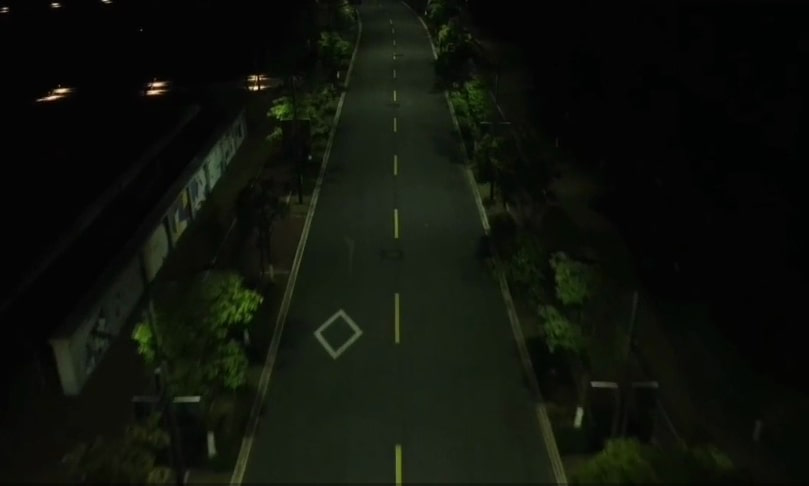
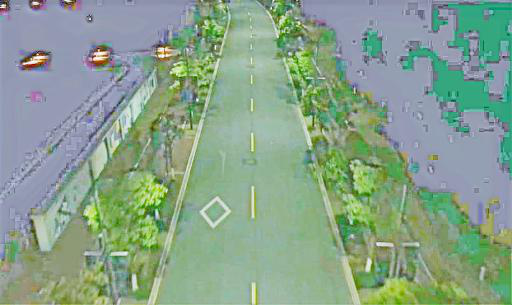
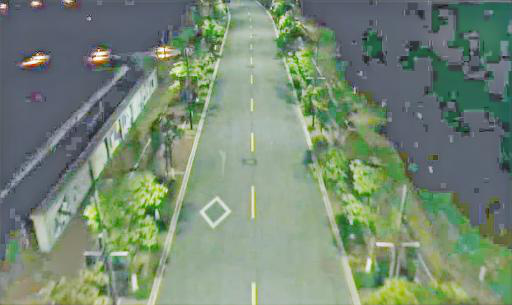
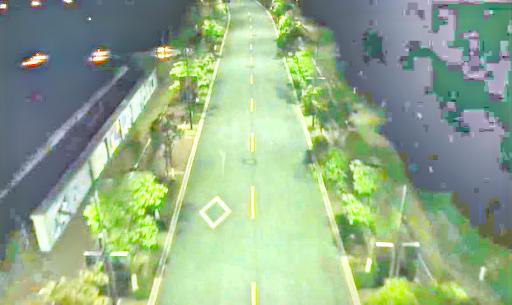
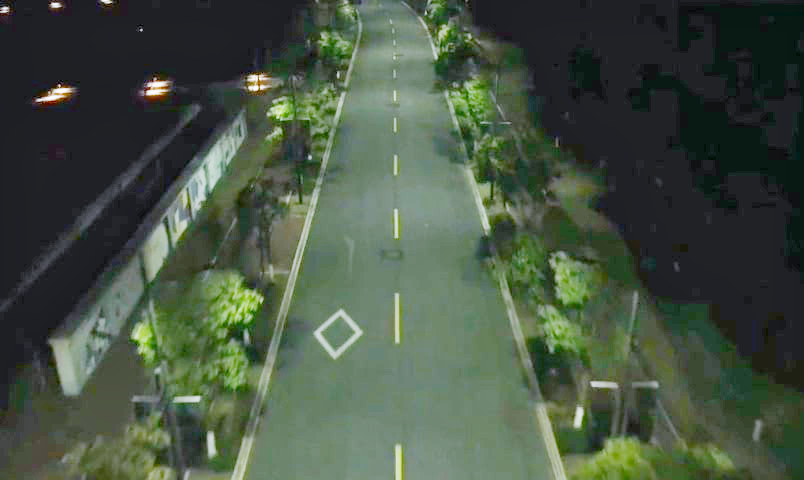
1. Images Vidéo en Faible Luminosité
De gauche à droite, et de haut en bas : Sombre, Retinex [1], KinD [2], EnlightenGAN [3], Zero-DCE [4], Notre méthode.
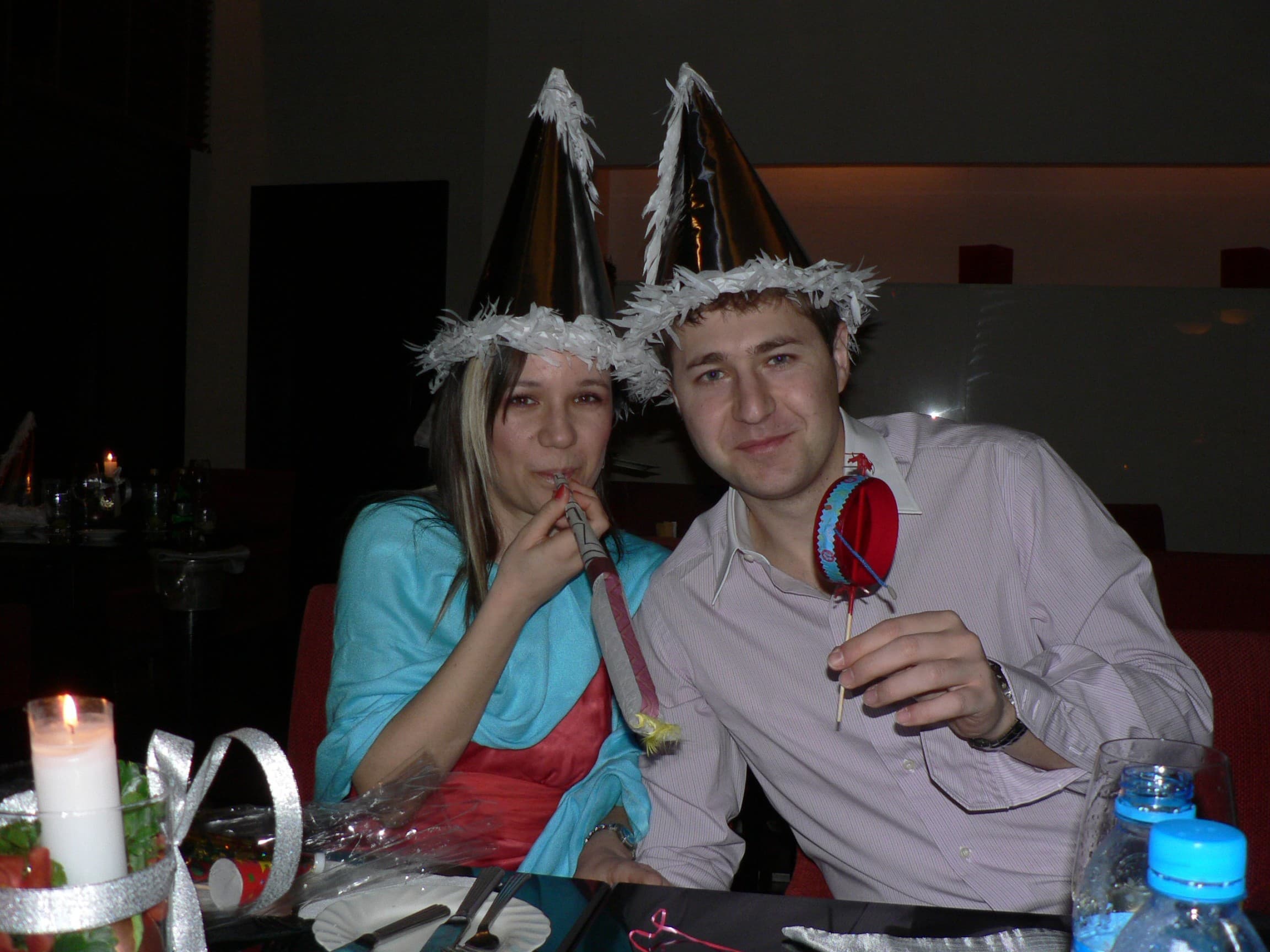
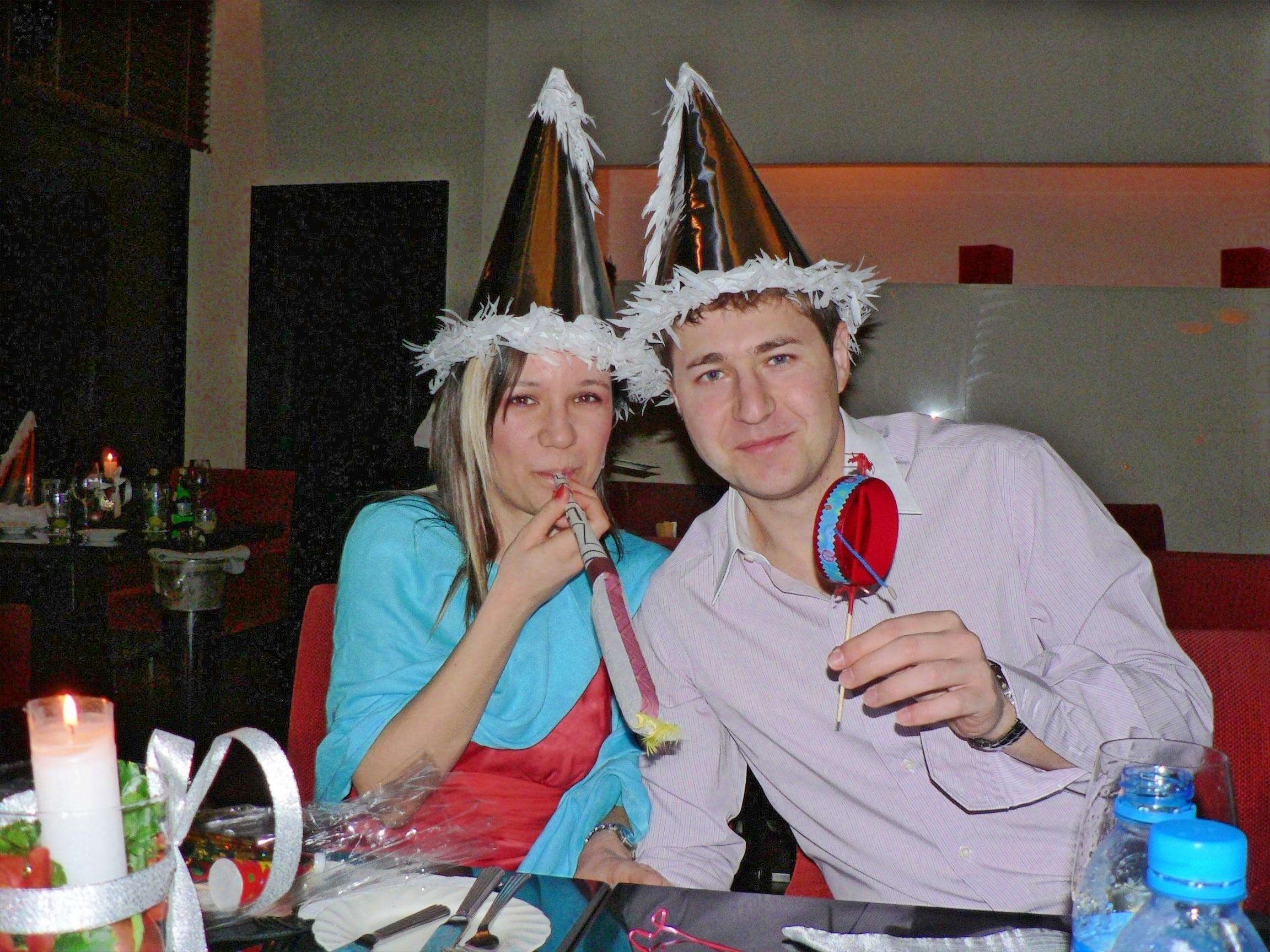
2. Images en Faible Luminosité (Monde Réel)
De gauche à droite, et de haut en bas : Sombre, PIE [5], LIME [6], Retinex [1], MBLLEN [7], KinD [2], Zero-DCE [4], Notre méthode
Démarrer
1. Prérequis
- CUDA 10.0
- Python 3.6+
- Pytorch 1.0+
- torchvision 0.4+
- opencv-python
- numpy
- pillow
- scikit-image
2. Préparer les jeux de données
Jeu de données de test
- Téléchargez les images officielles de test depuis BaiduYun avec le mot de passe
8itq. - Déplacez le fichier décompressé dans
data/test_data/. - Vous pouvez également placer des jeux de données personnalisés ou vos propres images en basse lumière dans ce dossier pour les tests. Exemple :
data/test_data/yourDataset/
Jeu de données d'entraînement
- Téléchargez les images officielles d'entraînement depuis GoogleDrive.
- Déplacez le fichier décompressé dans
data/train_data/.
Après préparation, les dossiers de données devraient ressembler à ceci :
data/
├── test_data/
│   ├── lowCUT/
│   ├── BDD/
│   ├── Cityscapes/
│   ├── DICM/
│   ├── LIME/
│   ├── LOL/
│   ├── MEF/
│   ├── NPE/
│   └── VV/
└── train_data/
    └── ...
3. Entraînement à partir de zéro
Pour entraîner le modèle :python train.py \
--lowlight_images_path path/to/train_images \
--snapshots_folder path/to/save_weightsExemple (entraîner à partir de zéro) :
python train.py \
--lowlight_images_path data/train_data \
--snapshots_folder weight/4. Reprendre l'entraînement
Pour reprendre l'entraînement à partir d'un point de contrôle :
python train.py \
  --lowlight_images_path path/to/train_images \
--snapshots_folder path/to/save_weights \
--load_pretrain True \
--pretrain_dir path/to/checkpoint.pthpython train.py \
--lowlight_images_path data/train_data \
--snapshots_folder weight/ \
--load_pretrain True \
--pretrain_dir weight/Epoch99.pth5. Tests
REMARQUE : Veuillez supprimer tous les fichiers readme.txt dans le dossierdata pour éviter les erreurs d'inférence du modèle.Pour tester le modèle :
python test.py \
  --input_dir path/to/your_input_images \
  --weight_dir path/to/pretrained_model.pth \
--test_dir path/to/output_folder python test.py \
--input_dir data/test_data/lowCUT \
--weight_dir weight/Epoch99.pth \
--test_dir test_output6. Tests sur les vidéos
Pour tester le modèle sur des vidéos (format MP4), exécutez dans le terminal :bash test_video.shIl y a cinq hyperparamètres dans demo/make_video.py pour le test vidéo. Voir l'explication suivante.
video_path: chemin de la vidéo en faible luminositéimage_lowlight_folder: chemin des images en faible luminositéimage_folder: chemin des images amélioréessave_path: chemin de la vidéo amélioréechoice: conversion vidéo vers image, ou image vers vidéo
Hyperparamètres
| Nom | Type | Défaut | |----------------------|-------|--------------------| | lowlight_images_path | str | data/train_data/ | | lr | float | 1e-3 | | weight_decay | float | 1e-3 | | grad_clip_norm | float | 0.1 | | num_epochs | int | 100 | | train_batch_size | int | 6 | | val_batch_size | int | 8 | | num_workers | int | 4 | | display_iter | int | 10 | | snapshot_iter | int | 10 | | scale_factor | int | 1 | | snapshots_folder | str | weight/ | | load_pretrain | bool | False | | pretrain_dir | str | weight/Epoch99.pth | | num_of_SegClass | int | 21 | | conv_type | str | dsc | | patch_size | int | 4 | | exp_level | float | 0.6 |Liste TODO
- [x] Lister les hyperparamètres (importants)
- [x] Résoudre le problème de taille d'entrée du modèle
- [x] Télécharger les poids pré-entraînés
- [x] Réécrire argparse d'entraînement et test dans un option.py
- [x] Réécrire l'entraînement sous forme de classe
- [x] Réécrire le test sous forme de classe
- [x] Télécharger le jeu de données de test
- [x] Télécharger le lien Arxiv
- [x] Tester sur vidéo
- [x] Télécharger le BibTeX
- [x] Modifier le fichier Readme
- [x] Télécharger l’architecture du modèle
- [ ] Fournir une démo en ligne
Autres
Veuillez contacter zhengsh@kean.edu si vous avez des questions. Ce dépôt est largement basé sur Zero-DCE. Merci de partager le code !Citations
Veuillez citer l’article suivant si vous trouvez ce dépôt utile.@inproceedings{zheng2022semantic,
title={Semantic-guided zero-shot learning for low-light image/video enhancement},
author={Zheng, Shen and Gupta, Gaurav},
booktitle={Proceedings of the IEEE/CVF Winter Conference on Applications of Computer Vision},
pages={581--590},
year={2022}
}Références
[1] Wei, Chen, et al. « Deep retinex decomposition for low-light enhancement. » arXiv preprint arXiv:1808.04560 (2018).[2] Zhang, Yonghua, Jiawan Zhang, et Xiaojie Guo. « Kindling the darkness: A practical low-light image enhancer. » Proceedings of the 27th ACM international conference on multimedia. 2019.
[3] Jiang, Yifan, et al. « Enlightengan: Deep light enhancement without paired supervision. » IEEE Transactions on Image Processing 30 (2021): 2340-2349.
[4] Guo, Chunle, et al. « Zero-reference deep curve estimation for low-light image enhancement. » Proceedings of the IEEE/CVF Conference on Computer Vision and Pattern Recognition. 2020.
[5] Fu, Xueyang, et al. « A probabilistic method for image enhancement with simultaneous illumination and reflectance estimation. » IEEE Transactions on Image Processing 24.12 (2015): 4965-4977.
[6] Guo, Xiaojie, Yu Li, et Haibin Ling. « LIME: Low-light image enhancement via illumination map estimation. » IEEE Transactions on image processing 26.2 (2016): 982-993.
[7] Lv, Feifan, et al. « MBLLEN: Low-Light Image/Video Enhancement Using CNNs. » BMVC. 2018.
--- Tranlated By Open Ai Tx | Last indexed: 2025-12-29 ---