Semantic-Guided-Low-Light-Image-Enhancement
Esta es la implementación oficial en Pytorch de nuestro artículo "Aprendizaje Zero-Shot Guiado por Semántica para la Mejora de Imágenes/Vídeos en Condiciones de Baja Luz"Actualizaciones
- 2021.11.27: Se ha subido la figura de la arquitectura del modelo.
- 2021.11.10: Este trabajo ha sido aceptado y será presentado en WACV 2022.
- 2021.10.8: Una forma fácil de calcular las métricas mPA y mIOU está disponible en este repositorio
- 2021.10.6: Se ha publicado un vídeo de baja luz mejorado en formato GIF.
- 2021.10.5: Un vídeo de baja luz de muestra y su resultado mejorado están disponibles en: [Low-Light] [Enhanced]
- 2021.10.5: Mi nuevo repositorio contiene una colección de métodos para la mejora de imágenes en baja luz. Espero que lo encuentres útil.
- 2021.10.4: El enlace de arxiv está disponible en http://arxiv.org/abs/2110.00970
Resumen
Low-light images challenge both human perceptions and computer vision algorithms. It is crucial to make algorithms robust to enlighten low-light images for computational photography and computer vision applications such as real-time detection and segmentation tasks. This paper proposes a semantic-guided zero-shot low-light enhancement network which is trained in the absence of paired images, unpaired datasets, and segmentation annotation. Firstly, we design an efficient enhancement factor extraction network using depthwise separable convolution. Secondly, we propose a recurrent image enhancement network for progressively enhancing the low-light image. Finally, we introduce an unsupervised semantic segmentation network for preserving the semantic information. Extensive experiments on various benchmark datasets and a low-light video demonstrate that our model outperforms the previous state-of-the-art qualitatively and quantitatively. We further discuss the benefits of the proposed method for low-light detection and segmentation.Arquitectura del Modelo
Haga clic en el siguiente enlace para ver la arquitectura del modelo en formato pdf.
Resultados de Muestra
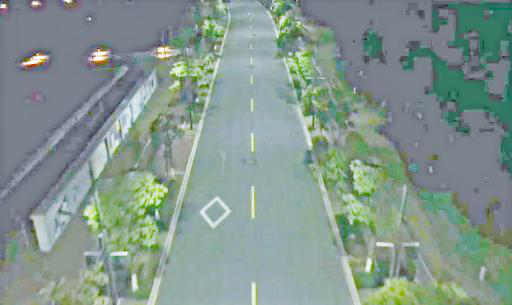
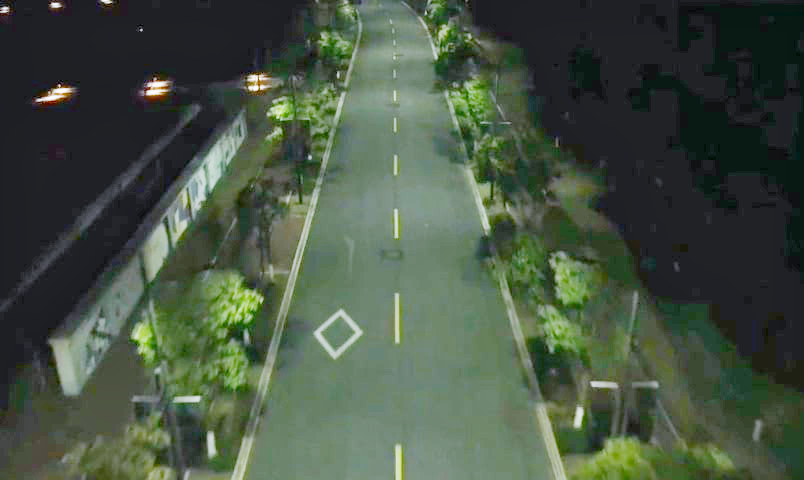
1. Cuadros de Video con Baja Iluminación
De izquierda a derecha, y de arriba hacia abajo: Oscuro, Retinex [1], KinD [2], EnlightenGAN [3], Zero-DCE [4], Nuestro método.
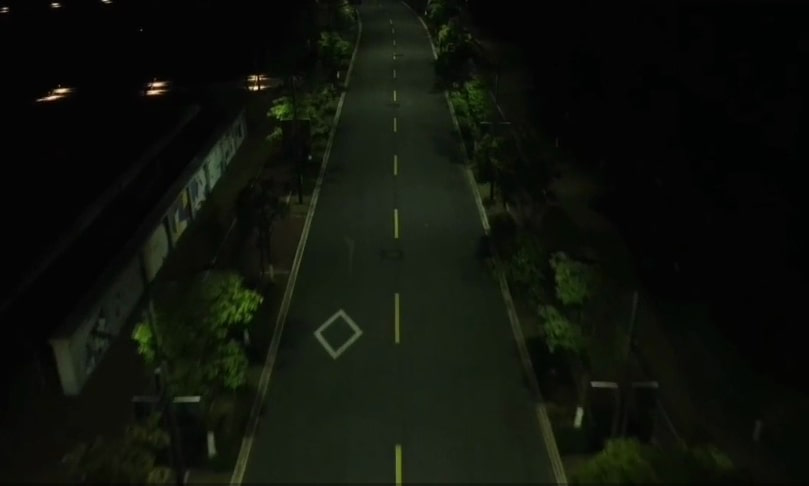
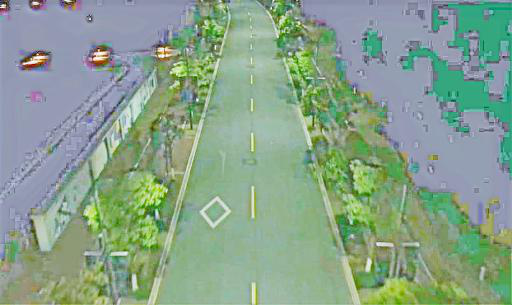
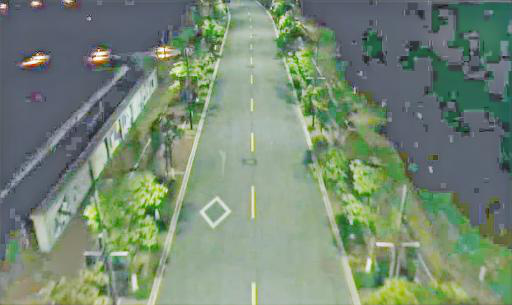
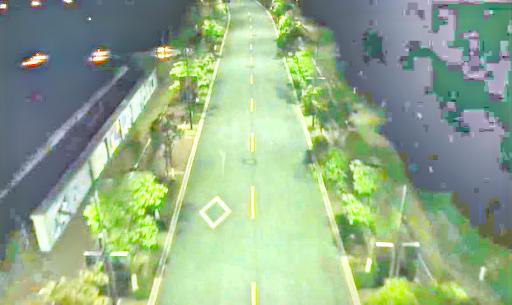
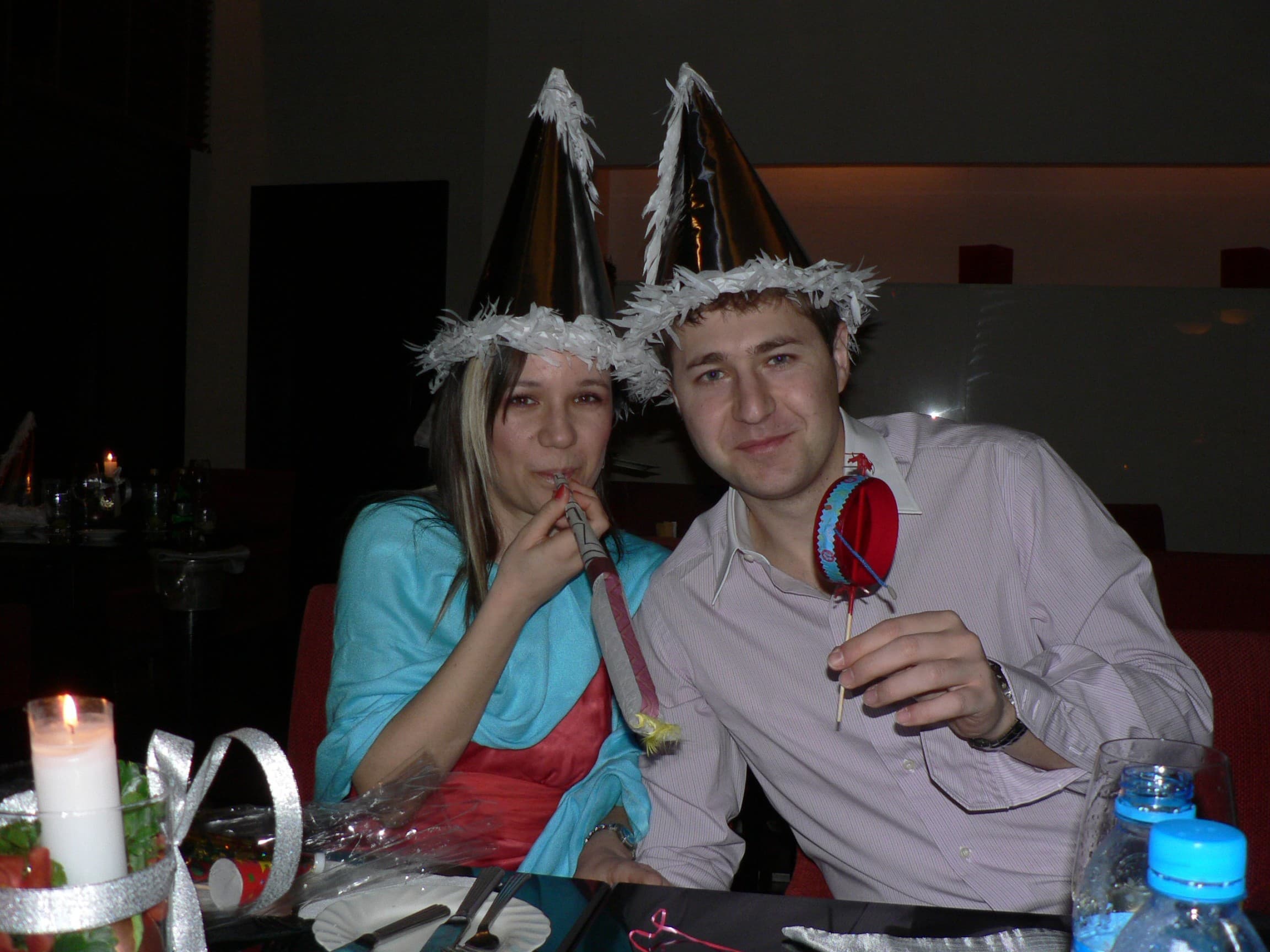
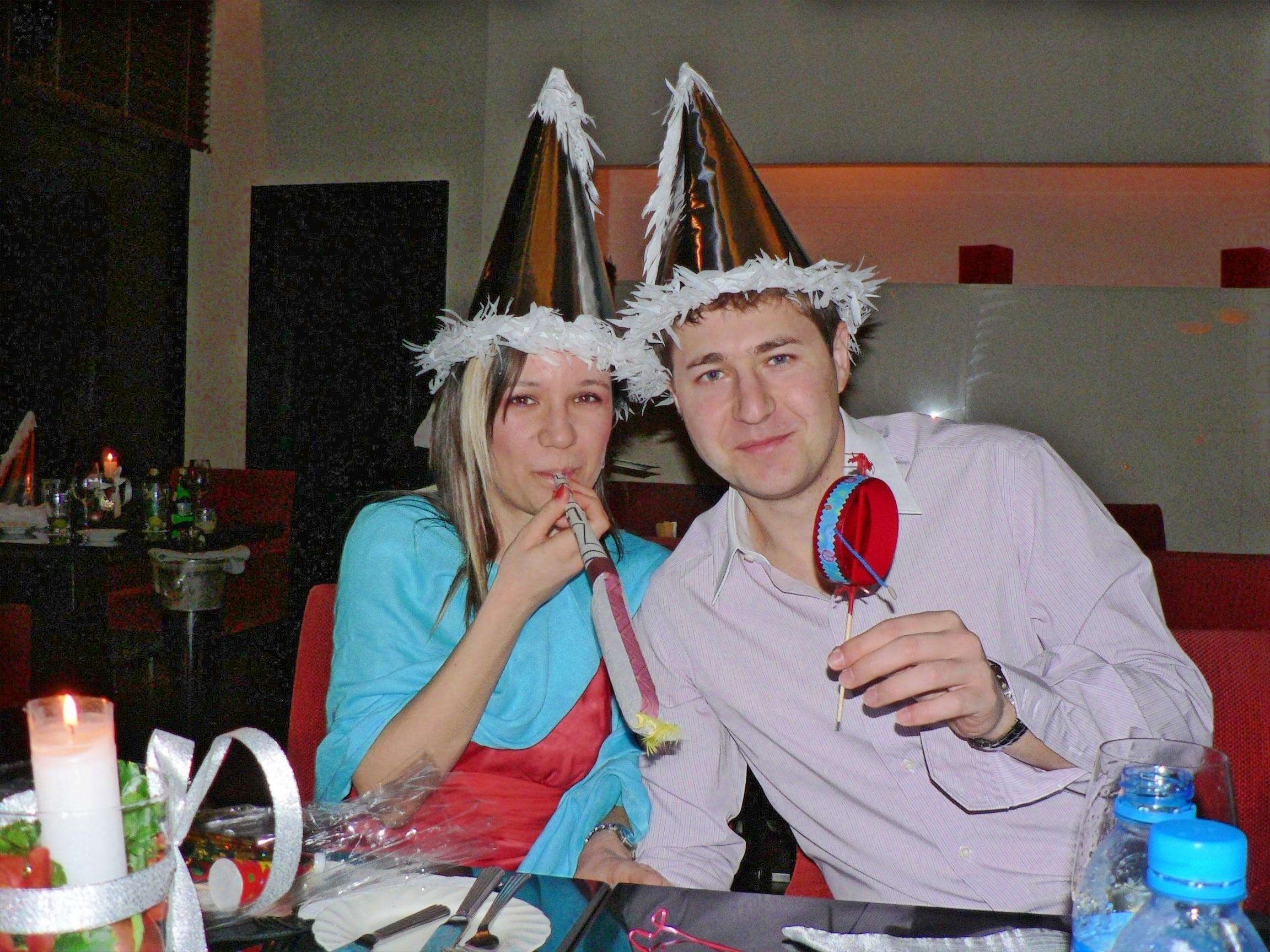
2. Imágenes con Baja Iluminación (Mundo Real)
De izquierda a derecha, y de arriba hacia abajo: Oscuro, PIE [5], LIME [6], Retinex [1], MBLLEN [7], KinD [2] , Zero-DCE [4], Nuestro método
Comenzar
1. Requisitos
- CUDA 10.0
- Python 3.6+
- Pytorch 1.0+
- torchvision 0.4+
- opencv-python
- numpy
- pillow
- scikit-image
2. Preparar Conjuntos de Datos
Conjunto de Datos de Prueba
- Descargue las imágenes oficiales de prueba desde BaiduYun con la contraseña
8itq. - Mueva el archivo descomprimido a
data/test_data/. - También puede colocar conjuntos de datos personalizados o sus propias imágenes con poca luz en esta carpeta para pruebas. Ejemplo:
data/test_data/yourDataset/
Conjunto de Datos de Entrenamiento
- Descargue las imágenes oficiales de entrenamiento desde GoogleDrive.
- Mueva el archivo descomprimido a
data/train_data/.
Después de la preparación, las carpetas de datos deberían verse así:
data/
├── test_data/
│   ├── lowCUT/
│   ├── BDD/
│   ├── Cityscapes/
│   ├── DICM/
│   ├── LIME/
│   ├── LOL/
│   ├── MEF/
│   ├── NPE/
│   └── VV/
└── train_data/
    └── ...
3. Entrenamiento desde cero
Para entrenar el modelo:python train.py \
--lowlight_images_path path/to/train_images \
--snapshots_folder path/to/save_weightspython train.py \
--lowlight_images_path data/train_data \
--snapshots_folder weight/4. Reanudar el Entrenamiento
Para reanudar el entrenamiento desde un punto de control:
python train.py \
  --lowlight_images_path path/to/train_images \
--snapshots_folder path/to/save_weights \
--load_pretrain True \
--pretrain_dir path/to/checkpoint.pthEjemplo (reanudar desde Epoch99.pth):
python train.py \
  --lowlight_images_path data/train_data \
--snapshots_folder weight/ \
--load_pretrain True \
--pretrain_dir weight/Epoch99.pth5. Pruebas
NOTA: Por favor, elimine todos los archivos readme.txt en la carpetadata para evitar errores de inferencia del modelo.Para probar el modelo:
python test.py \
  --input_dir path/to/your_input_images \
  --weight_dir path/to/pretrained_model.pth \
--test_dir path/to/output_folder python test.py \
--input_dir data/test_data/lowCUT \
--weight_dir weight/Epoch99.pth \
--test_dir test_output6. Pruebas en Videos
Para probar el modelo en videos (formato MP4), ejecute en la terminal:bash test_video.shHay cinco hiperparámetros en demo/make_video.py para la prueba de video. Vea la siguiente explicación.
video_path: ruta del video en baja luminosidadimage_lowlight_folder: ruta de las imágenes en baja luminosidadimage_folder: ruta de las imágenes mejoradassave_path: ruta del video mejoradochoice: si convertir video a imagen, o imagen a video
Hiperparámetros
| Nombre | Tipo | Predeterminado | |----------------------|-------|--------------------| | lowlight_images_path | str | data/train_data/ | | lr | float | 1e-3 | | weight_decay | float | 1e-3 | | grad_clip_norm | float | 0.1 | | num_epochs | int | 100 | | train_batch_size | int | 6 | | val_batch_size | int | 8 | | num_workers | int | 4 | | display_iter | int | 10 | | snapshot_iter | int | 10 | | scale_factor | int | 1 | | snapshots_folder | str | weight/ | | load_pretrain | bool | False | | pretrain_dir | str | weight/Epoch99.pth | | num_of_SegClass | int | 21 | | conv_type | str | dsc | | patch_size | int | 4 | | exp_level | float | 0.6 |Lista de tareas
- [x] Listar hiperparámetros (importantes)
- [x] Resolver problema con tamaño de entrada del modelo
- [x] Subir peso preentrenado
- [x] Reescribir argparse de entrenamiento y prueba en un option.py
- [x] Reescribir entrenamiento como una clase
- [x] Reescribir prueba como una clase
- [x] Subir dataset de prueba
- [x] Subir enlace de Arxiv
- [x] Pruebas en video
- [x] Subir BibTeX
- [x] Modificar archivo Readme
- [x] Subir arquitectura del modelo
- [ ] Proveer demo en línea
Otros
Por favor contacte a zhengsh@kean.edu si tiene alguna pregunta. Este repositorio está fuertemente basado en Zero-DCE. ¡Gracias por compartir el código!Citas
Por favor cite el siguiente artículo si encuentra útil este repositorio.@inproceedings{zheng2022semantic,
title={Semantic-guided zero-shot learning for low-light image/video enhancement},
author={Zheng, Shen and Gupta, Gaurav},
booktitle={Proceedings of the IEEE/CVF Winter Conference on Applications of Computer Vision},
pages={581--590},
year={2022}
}Referencias
[1] Wei, Chen, et al. "Descomposición profunda de Retinex para mejora en baja iluminación." arXiv preprint arXiv:1808.04560 (2018).[2] Zhang, Yonghua, Jiawan Zhang, y Xiaojie Guo. "Encendiendo la oscuridad: Un mejorador práctico de imágenes en baja iluminación." Proceedings of the 27th ACM international conference on multimedia. 2019.
[3] Jiang, Yifan, et al. "Enlightengan: Mejora profunda de luz sin supervisión pareada." IEEE Transactions on Image Processing 30 (2021): 2340-2349.
[4] Guo, Chunle, et al. "Estimación de curva profunda sin referencia para mejora de imágenes en baja iluminación." Proceedings of the IEEE/CVF Conference on Computer Vision and Pattern Recognition. 2020.
[5] Fu, Xueyang, et al. "Un método probabilístico para mejora de imágenes con estimación simultánea de iluminación y reflectancia." IEEE Transactions on Image Processing 24.12 (2015): 4965-4977.
[6] Guo, Xiaojie, Yu Li, y Haibin Ling. "LIME: Mejora de imágenes en baja iluminación mediante estimación del mapa de iluminación." IEEE Transactions on image processing 26.2 (2016): 982-993.
[7] Lv, Feifan, et al. "MBLLEN: Mejora de imágenes/videos en baja iluminación usando CNNs." BMVC. 2018.
--- Tranlated By Open Ai Tx | Last indexed: 2025-12-29 ---